
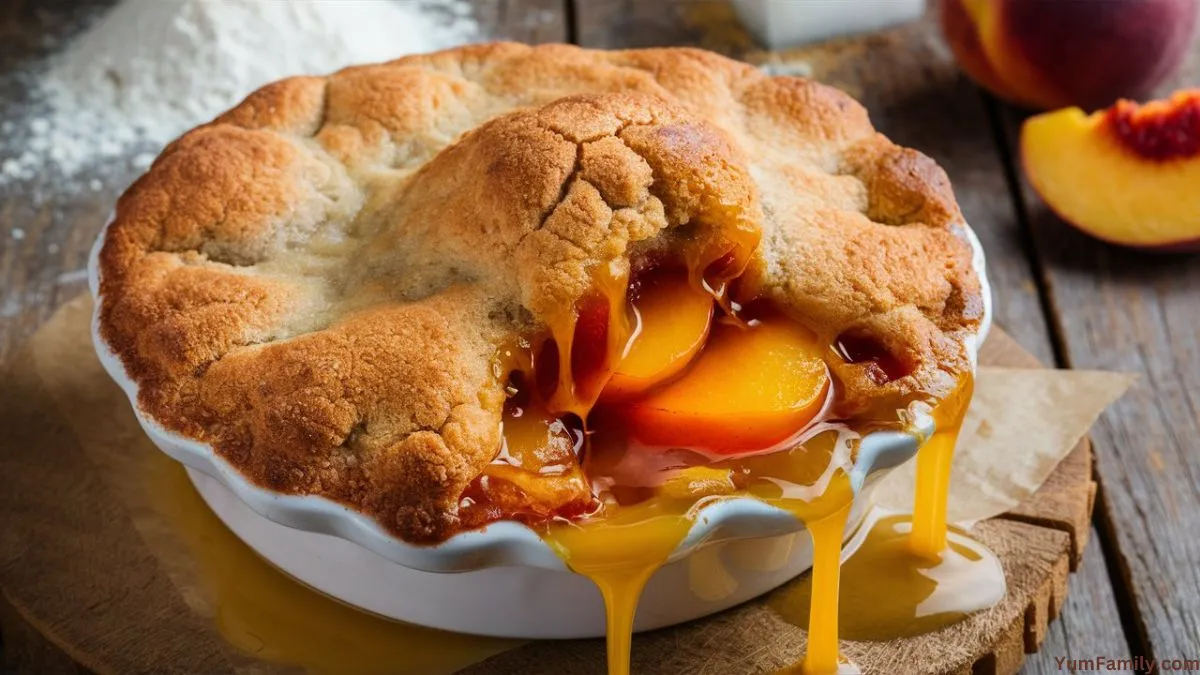
Peach cobbler is a delightful dessert that many enjoy. However, sometimes it can turn out runny and less than perfect. Let’s dive into the causes, prevention, and fixes for a runny peach cobbler.
Table of Contents
Ingredients
Filling
- 5–6 cups sliced peaches (fresh or canned*)
- ½ cup sugar
- 1 tbsp lemon juice
- 1 tsp cinnamon
- ¼ tsp nutmeg (optional)
- 1 tsp vanilla extract
- 1 tbsp cornstarch (optional, for thicker filling)
Topping
- 1 cup all-purpose flour
- ½ cup sugar
- 1½ tsp baking powder
- ¼ tsp salt
- ½ cup milk
- ½ cup (1 stick) butter, melted
*If using canned peaches, drain them first.
Instructions
- Preheat oven to 350°F (175°C).
- Make the filling: In a bowl, mix peaches, sugar, lemon juice, cinnamon, nutmeg, vanilla, and cornstarch. Spread evenly in a greased 9×9-inch baking dish.
- Make the batter: In another bowl, whisk flour, sugar, baking powder, and salt. Stir in milk until smooth.
- Assemble: Pour batter evenly over the peaches (don’t stir). Drizzle melted butter over the top.
- Bake for 40–45 minutes, until the top is golden and the peaches are bubbly.
- Cool slightly (10–15 minutes) before serving.
Serve With
- Vanilla ice cream 🍨
- Whipped cream
- Or enjoy it warm on its own
Causes of a Runny Peach Cobbler
Overly Juicy Peaches
Peaches that are too ripe release more juice, leading to a runny cobbler. Opt for firm, slightly under-ripe peaches to avoid this issue.
Insufficient Thickening Agent
Not using enough thickening agents like cornstarch, tapioca flour, or flour can make your cobbler watery. These agents help absorb excess moisture.
Incorrect Baking Temperature or Time
Baking at the wrong temperature or not long enough can prevent the filling from setting. Always follow the recipe’s temperature and baking time closely.
Improper Cooling
Cutting into the cobbler before it cools can cause the filling to be runny. Allowing it to cool completely helps the filling to set properly.
Preventing a Runny Peach Cobbler
Using Firm, Ripe Peaches
Select peaches that are firm to touch. This reduces the amount of juice released during baking.
Pre-cooking the Filling
Cooking the peaches separately before adding them to the cobbler helps evaporate excess moisture. For a detailed guide on pre-cooking the filling, refer to this resource.
Adding Thickening Agents
Mixing in thickeners such as cornstarch, tapioca flour, or flour helps absorb the extra juice from the peaches, keeping your cobbler firm.
Adjusting Recipe Proportions
Balance the liquid content and ensure proper ratios between fruit and batter. This helps maintain the right consistency.
Correcting a Runny Peach Cobbler
Post-Baking Adjustments
If your cobbler is already runny after baking, add an extra layer of topping or a bit more thickening agent to absorb the excess liquid. You can find additional tips here.
Serving Tips
Serve the cobbler with accompaniments like ice cream or whipped cream to mask any remaining runniness. This enhances the overall presentation.
Storing and Reheating
Store the cobbler in the refrigerator to keep it from becoming too watery. Reheat it gently to avoid turning it runny again.
FAQs
Why is my peach cobbler runny even with cornstarch?
It might be due to overripe peaches or not using enough cornstarch. Ensure you use the correct amount and the right type of peaches.
Can I use frozen peaches?
Yes, but frozen peaches contain more water. Adjust the thickening agents accordingly to absorb the extra moisture.
How do I know if my cobbler is done?
The top should be golden brown, and the filling should be bubbling. This indicates that the cobbler is properly cooked.
Conclusion
By understanding the causes of a runny peach cobbler and applying these prevention and correction techniques, you can achieve the perfect cobbler every time. Experiment with these tips and enjoy a delicious, firm peach cobbler.
1 thought on “Why is my peach cobbler so runny?”